

How many senators are there in the United States? Learn why the US Senate has 100 members, how many each state gets, and how Senate terms work.
The United States has 100 U.S. senators, with two senators representing each of the 50 states. The number is established by the U.S. Constitution and ensures that every state has equal representation in the Senate, regardless of its population.
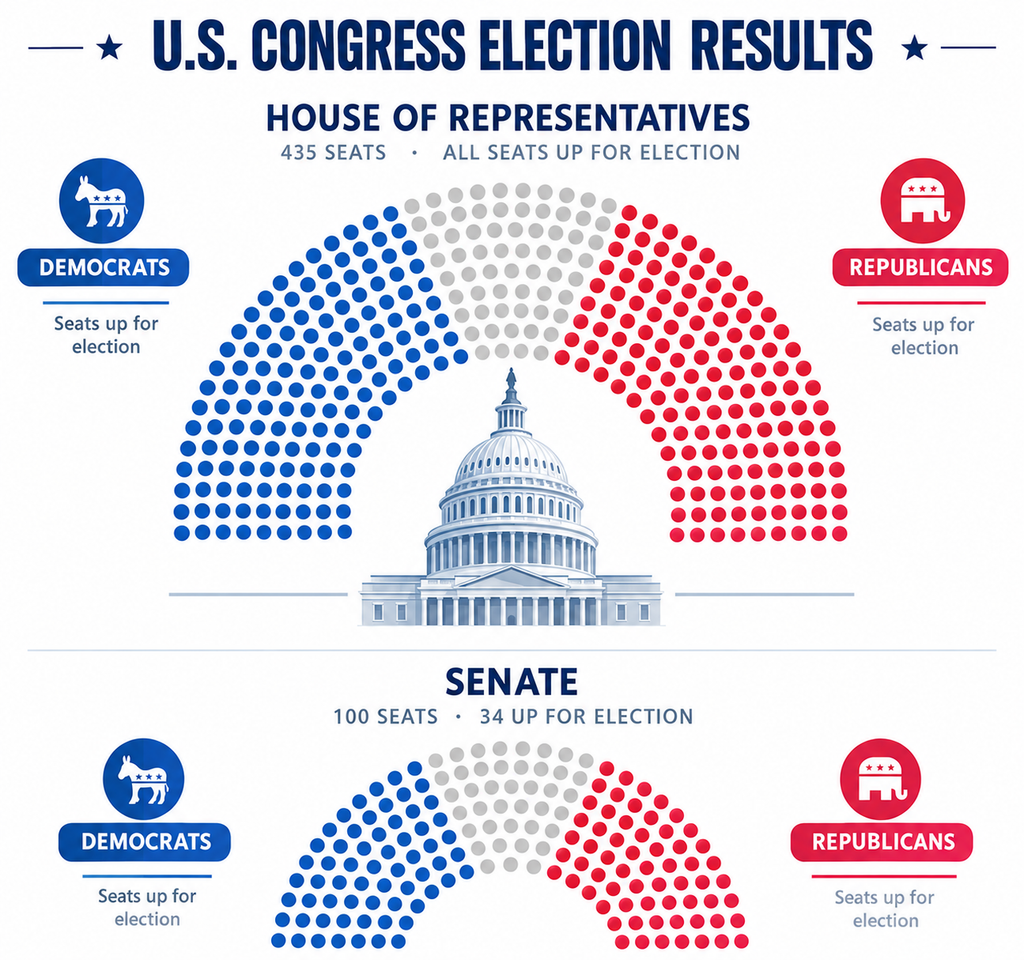
Senators serve six-year terms, and elections are staggered so that approximately one-third of Senate seats are up for election every two years.
Understanding how many senators there are, why each state has two, and how the Senate works can help Americans better understand Congress, elections, and federal government decisions.
How Many Senators Are There in the United States?
There are 100 senators in the United States Senate. Each of the 50 states elects two senators, making the total 50 × 2 = 100.
The “official U.S. Senate website” (https://www.senate.gov/about/origins-foundations/senate-and-constitution/two-senators-per-state.htm) explains that the Constitution provides for two senators from every state.
This arrangement is different from the U.S. House of Representatives, where the number of representatives assigned to each state depends largely on its population.
For example, California and Wyoming each have two senators, even though their populations are very different. This equal representation is a fundamental feature of the American system of government.
How Many Senators Does Each State Have?
Every U.S. state has two senators. The following table lists all 50 states and their Senate representation.
| State | Number of senators |
| Alabama | 2 |
| Alaska | 2 |
| Arizona | 2 |
| California | 2 |
| Colorado | 2 |
| Connecticut| | 2 |
| Delaware | 2 |
| Florida | 2 |
| Georgia | 2 |
| Hawaii | 2 |
| Idaho | 2 |
| Illinois | 2 |
| Indiana | 2 |
| Iowa | 2 |
| Kansas | 2 |
| Kentucky | 2 |
| Louisiana | 2 |
| Maine | 2 |
| Maryland | 2 |
| Massachusetts | 2 |
| Michigan | 2 |
| Minnesota | 2 |
| Mississippi | 2 |
| Missouri | 2 |
| Montana | 2 |
| Nebraska | 2 |
| Nevada | 2 |
| New Hampshire | 2 |
| New Jersey | 2 |
| New Mexico | 2 |
| New York | 2 |
| North Carolina | 2 |
| North Dakota | 2 |
| Ohio | 2 |
| Oklahoma | 2 |
| Oregon | 2 |
| Pennsylvania | 2 |
| Rhode Island | 2 |
| South Carolina | 2 |
| South Dakota | 2 |
| Tennessee | 2 |
| Texas | 2 |
| Utah | 2 |
| Vermont | 2 |
| Virginia | 2 |
| Washington | 2 |
| West Virginia | 2 |
| Wisconsin | 2 |
| Wyoming | 2 |
| Total | 100 |
The table shows the number of Senate seats assigned to each state under the Constitution. It does not list individual senators, whose names and service status can change over time.
To find the current senators representing your state, visit the “official U.S. Senate website” (https://www.senate.gov/senators/).
Why Does Each State Have Two Senators?
The two-senator rule originated during the 1787 Constitutional Convention, when delegates debated how states should be represented in the new federal government.
Larger states generally favored representation based on population, while smaller states wanted equal representation so they would not be overshadowed by states with more residents.
The resulting agreement, known as the Great Compromise or Connecticut Compromise, established two chambers of Congress:
- The Senate: Every state receives equal representation, with two senators.
- The House of Representatives: Representation is apportioned among states according to population.
This arrangement balances the interests of states as political units with the interests of citizens represented according to population.
The “U.S. Senate’s historical explanation of equal state representation” (https://www.senate.gov/about/origins-foundations/senate-and-constitution.htm) provides additional background on this constitutional compromise.
How Long Does a U.S. Senator Serve?
A U.S. senator serves a six-year term. Unlike members of the House of Representatives, senators do not face regular reelection every two years.
Senate seats are divided into three election classes. Approximately one-third of the seats are scheduled for election every two years, helping maintain continuity in the chamber.
A senator may seek reelection when the term expires. There is no general constitutional limit on the number of six-year terms a senator may serve.
Read the “official Senate explanation of qualifications and terms of service” (https://www.senate.gov/senators/qualifications_termsofservice.htm) for more details.
What Is the Difference Between the Senate and the House of Representatives?
The Senate and the House of Representatives are the two chambers of the U.S. Congress. They share responsibility for federal legislation but have important structural differences.
Feature
- Membership
- Representation
- Term length
- Regular election cycle
- Presiding officer
- arrangements
Senate
- 100 senators
- Two per state
- Six years
- About one-third of seats every two years
- Vice president of the United States, with a president pro tempore and other presiding arrangements
House of Representatives
- 435 voting representatives
- Based largely on population
Term length - Two years
- All voting seats every two years
- Speaker of the House
Both chambers must generally pass the same version of a bill before it can be presented to the president. The Senate also has specific constitutional responsibilities involving confirmations of many presidential nominees and ratification of treaties, with the required two-thirds Senate vote for treaty ratification.
The House has the sole power to impeach federal officials, while the Senate conducts impeachment trials and decides whether to convict.
These differences are part of the constitutional system of checks and balances.
READ MORE : How Do U.S. Midterm Elections Work? A Complete Guide for Voters
Do Washington, D.C., and U.S. Territories Have Senators?
No. Washington, D.C., and U.S. territories do not have voting senators in the U.S. Senate.
The Constitution provides two senators for each state. The District of Columbia and U.S. territories are not states, so they do not receive Senate seats under that rule.
Washington, D.C., has a delegate in the House of Representatives who can participate in certain proceedings but cannot vote on final passage of legislation in the full House. U.S. territories also have representation arrangements in the House, but their delegates do not have the same voting rights as state representatives.
This is why the number of U.S. senators is 100 rather than a number that includes the District of Columbia or territories.
How Are U.S. Senators Elected?
Today, senators are elected directly by voters in their respective states. This system was established by the Seventeenth Amendment to the Constitution, ratified in 1913.
Before the amendment, state legislatures selected senators.
To qualify for the office, the Constitution requires a senator to be at least 30 years old, have been a U.S. citizen for at least nine years, and be an inhabitant of the state the senator represents at the time of election.
Learn more from the “Constitution Annotated’s explanation of the Seventeenth Amendment” (https://constitution.congress.gov/browse/essay/amdt17-2/ALDE_00001001/).
Frequently Asked Questions
How many senators are there in the United States?
There are 100 U.S. senators, with two representing each of the 50 states.
How many senators does each state have?
Every state has two senators, regardless of its population.
Why are there 100 senators?
The Constitution establishes two senators per state. With 50 states in the Union, this produces a total of 100 Senate seats.
How many senators are there in each party?
The party breakdown changes as elections occur, vacancies arise, or senators change party affiliation. For the latest numbers, consult the “Senate’s official party division records” (https://www.senate.gov/history/partydiv.htm).
How often are U.S. senators elected?
Senators serve six-year terms. Approximately one-third of Senate seats are scheduled for election every two years.
Are there term limits for U.S. senators?
No. The U.S. Constitution does not impose a general limit on how many terms a senator may serve.
Does Washington, D.C., have two senators?
No. The two-senator rule applies to states. Washington, D.C., is a federal district rather than a state and does not have voting representation in the Senate.
How many members are in the entire U.S. Congress?
Congress has 535 voting members in its two chambers: 100 senators and 435 voting members of the House of Representatives. The House also includes delegates and a resident commissioner who can participate in certain proceedings but are not counted among its 435 voting members.
Final Answer: How Many Senators Are There?
The United States has 100 senators, two from each of the 50 states. Senators serve six-year terms, and the staggered election system means that approximately one-third of Senate seats are up for election every two years.
The Senate’s equal representation rule is a central part of the U.S. constitutional system, distinguishing it from the population-based representation of the House of Representatives.
For more explainers on Congress, elections, and American government, follow PoliticalTweet for clear, fact-based coverage of U.S. politics.
Sources: U.S. Senate, Senate.gov; Constitution Annotated, Congress.gov.

[…] Primary elections matter because they influence which names appear on the ballot in November. They can also shape debates about the economy, immigration, healthcare, taxes, government spending and other major political issues. […]